



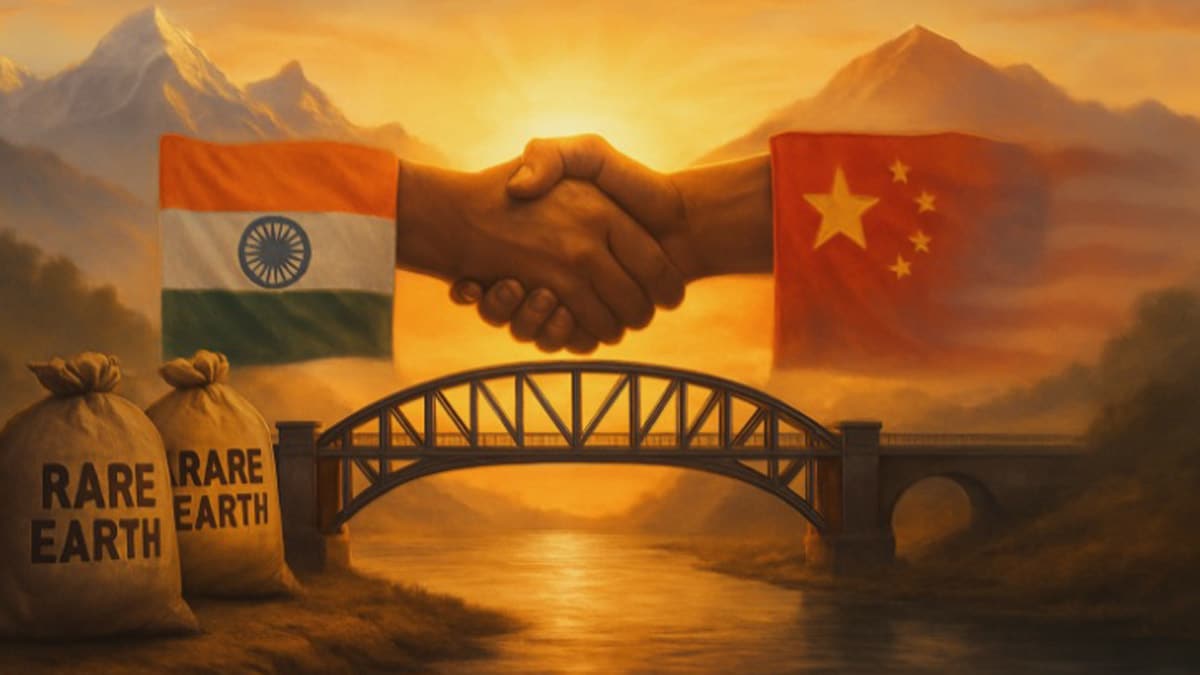
“For India and China, the real contest is not along the border but in whether they can build enough trust to shape the Asian century together rather than waste it in rivalry”.
The cautious resumption of high-level contact with the visit of Chinese Foreign Minister Wang Yi to Delhi, and subsequently the acceptance by Prime Minister Narendra Modi to attend the Shanghai Cooperation Organisation summit in Tianjin, is a positive development. This is accompanied by a resumption of border trade through Lipulekh and Nathu La, and new pledges to open negotiations on boundary delimitation and de-escalation between their militaries by revisiting the 20005 agreement. Even modest gains in diplomacy are important because the strategic relationship has been impacted by mistrust since the Galwan clashes in 2020. The disputed boundary remains frequently violated and a thorn in the texture of fabric of trust to be woven.
The problem of trust
What continues to hold the relationship back is not trade or diplomacy but trust. Each side doubts the intentions of the other. For India, the presence of Chinese forces close to Ladakh is an unacceptable reminder that agreements can be disregarded at will. For China, India’s growing partnership with the United States and its role in the Quad is viewed as an attempt to limit Beijing’s influence.
Mutual trust cannot be created in one summit, but it begins with small gestures. The new expert groups on boundary delimitation and military coordination will only matter if they deliver visible results and are not reduced to talking shops. The resumption of direct flights, exchange of students, and cross-cultural activities like the Kailash Manasarovar pilgrimage to be effected in the year 2026 are such small indicators. Societal contact makes conflict harder to sustain. When ordinary citizens, students and businesses have a stake in peace, leaders feel pressure to deliver it.
The strategic triangle with the United States
The India–China equation cannot be separated from the presence of the United States. This triangle of relationships defines much of Asia’s strategic landscape. For Washington, India is the democratic partner of choice to balance China. For Beijing, India’s tilt towards Washington is both an irritant and a potential threat to its vision of Asian dominance. For New Delhi, both countries matter, but in very different ways.
India benefits from American technology, capital and defence cooperation. At the same time, it knows from history that US foreign policy is transactional. Washington’s embrace can be warm, but it can also turn cold when priorities change. Yet this must be the foundation of Asian strategy and relationship with China.
In this triangle lies both danger and opportunity. If India and China allow mistrust to dominate, the United States will find ample space to play one against the other. If they learn to manage their differences with maturity, they reduce the chance of being trapped in someone else’s great power rivalry.
India must learn to deal with China directly, based on its own national interests, not through the filter of Washington’s concerns. The issues that divide Delhi and Beijing are bilateral. Border management, river sharing, climate policy and trade imbalances cannot be outsourced to the framework of US–China competition. They must be settled between the two neighbours. That is how India will preserve its strategic space while keeping faith with its democratic partners elsewhere.
The role of economic cooperation
Economics will continue to be the biggest mooring point in the bond. China is also a major trading partner of India, with the trade exceeding 135 billion dollars. The balance of trade is rather large in favour of China, yet it also demonstrates inter-dependability. Neither country can afford to weaponise economic ties too frequently without risking mutual damage.
In the future, the challenge remains to find new spheres of interaction.
Opportunities exist in digital infrastructure, green technology, disaster management and resilient supply chains. Joint ventures have the capability of watering down mistrust and building strategies that incline towards cooperation. Historical traumas cannot be eliminated by trade, but it can offer an incentive that is sufficient to discourage escalation.
Rebuilding trust, slowly but surely
There are several challenges ahead. The resolution of border issues, even if inching towards it with caution, will be positive.
Communication mechanisms and hotlines should be employed. Political tussles should not be applied to economic relations. Most importantly, leaders should convey the message to the domestic audience that collaboration with each other is not a sign of weakness but rather a display of convergence with caution for a better tomorrow.
Trust reconstruction will not be dramatic. This must occur in a non-confrontational way, by steady, small measures, and not in haste. A stable relationship characterised by trust and not mutual suspicion will enable the two nations to concentrate on their development and to contribute positively towards their achievements in the development of a multipolar world and regional stability.
India will need its Chanakya-Niti to be firm on national sovereignty and security issues, yet flexible in building positive relationships through dialogue and trade. By confirming participation in the Tianjin summit, India has shown that it is willing to engage at the highest level. By continuing its defence modernisation and external partnerships, it has shown that it will not engage from a position of weakness. Both tracks are essential.
Towards a shared Asian future
Much has been written about the promise of an Asian century, driven by the rise of India and China. That promise will remain hollow unless the two find a way to coexist with dignity and cooperation. Eternal rivalry may serve nationalist rhetoric, but it weakens both. Constructive coexistence, however difficult, opens the possibility of shared leadership in a multipolar order.
If the two neighbours are able to shift gears to long-term trust building as opposed to adopting tactical adjustments, they will not only be securing their futures but also providing stability within a fractured international system. America will not necessarily lose its importance, but the weight of a united Asia governed by two of the world's oldest civilisations holding hands will be weighted beyond the reach of any coercion by external powers.
The task before both governments is not simply to manage crises but to imagine a relationship that serves their people better than conflict ever could. That requires vision, patience and a recognition of shared responsibility.
The opinions expressed in this article are those of the author and do not purport to reflect the opinions or views of THE WEEK.
