



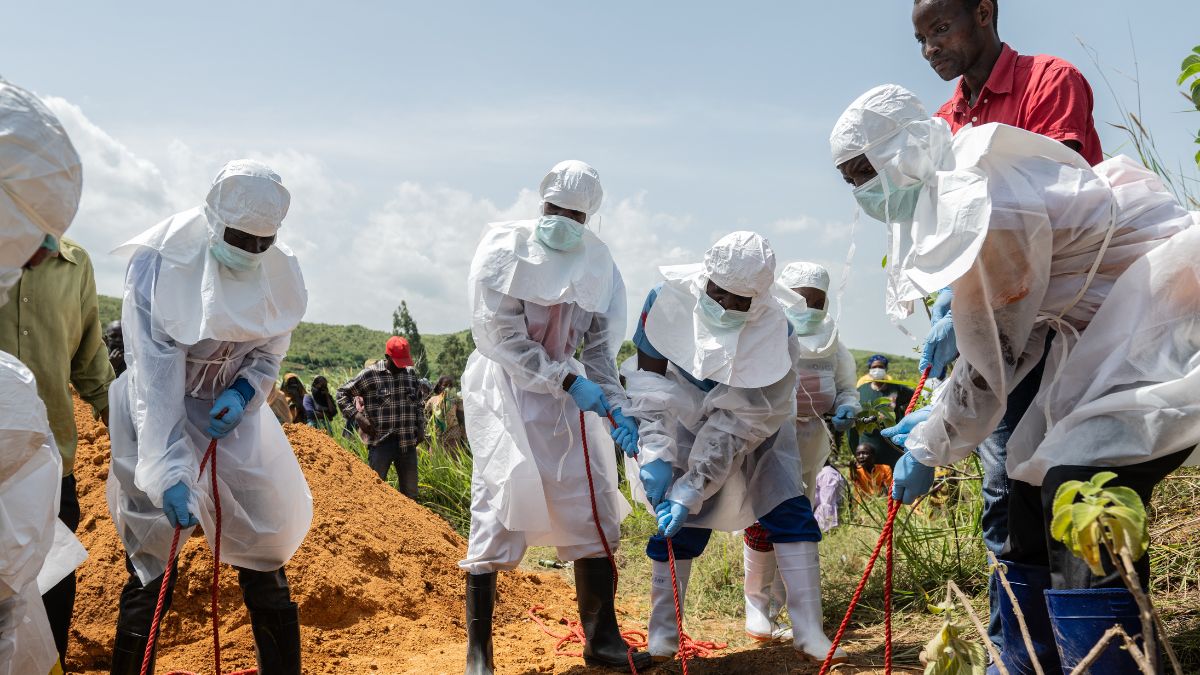
The ongoing Ebola outbreak has killed at least 2,000 people in Congo, as per the latest data. As per the government data, the outbreak has recorded a total of 4,381 confirmed cases, including 2,011 deaths, and a total of 704 patients are in admission.
What experts can agree in unison is that the outbreak in Democratic Republic of Congo concerns a previously unseen variant of the rare Bundibugyo species of the virus.
As per a study in the journal Nature Medicine, researchers are suggesting that it stemmed from a new transmission from animals to humans rather than from variants linked to earlier outbreaks.
As per Reuters, experts from Congo, Uganda, Belgium and other countries analysed the genetic make-up of virus samples from 22 patients in Congo and Uganda and found the outbreak strain was genetically distinct from previous Bundibugyo Ebola viruses seen in outbreaks in 2007 and 2012. Experts suggest the outbreak began with a fresh animal-to-human transmission event and was then spread between people.
There is no official confirmation on the animal source of the outbreak, but it has been known that Ebola virus spills over periodically from infected animals to humans, says Reuters.
The World Health Organization has declared the outbreak, which has also led to cases in neighbouring Uganda, a public health emergency of international concern.
Previously, a study published in the journal Science found that transmission may have begun in January or earlier in Ituri province, identifying more than 500 suspected cases between mid-January and May 15.
