


 Add as a preferred source on Google

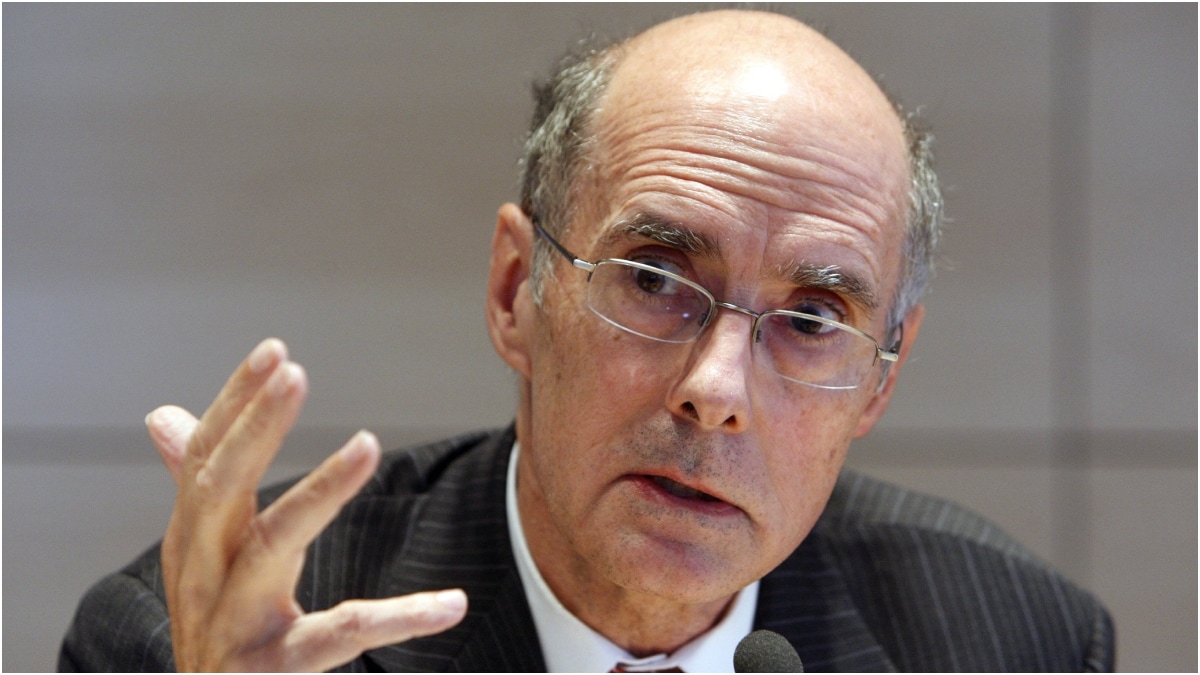
Strobe Talbott, the former US deputy secretary of state, acclaimed journalist and former long-serving president of the Brookings Institution, has died aged 80.
A leading authority on Russia, Talbott helped shape American foreign policy during the turbulent years following the Cold War. He was also instrumental in broadening Washington's engagement with India. Indians may remember him particularly for his extraordinary dialogue with external affairs minister Jaswant Singh after the 1998 nuclear tests, which helped transform a relationship strained by American sanctions into a strategic partnership.
Born Nelson Strobridge Talbott III in Dayton, Ohio, he developed an early fascination with Russia. During the Cuban missile crisis in 1962, he followed the confrontation with such intensity that he later recalled praying in his prep school chapel. At Yale, he immersed himself in Russian studies, even cutting pages from textbooks and pasting them into notebooks to master vocabulary. In 1968, as a Rhodes scholar at Oxford, he shared a narrow brick house with another ambitious young American, Bill Clinton. Their friendship would eventually take both men to the highest levels of American public life.
Talbott's journalistic career took an unusual turn while he was still at Oxford. Time magazine assigned the 23-year-old graduate student the task of translating hundreds of hours of secretly recorded conversations by Nikita Khrushchev. The work demanded exhausting, round-the-clock concentration. Clinton, his housemate, helped sustain the effort by dutifully making pots of tea and scrambling eggs for Talbott each morning. Published in 1970 as Khrushchev Remembers, the memoir brought Talbott international recognition at just 24. Soviet authorities, suspicious of the project, dismissed him as a CIA agent and it detailed his plans to become the Moscow bureau chief of the magazine.
Talbott spent 21 years at Time, rising from correspondent in Eastern Europe to State Department reporter, Washington bureau chief and principal foreign affairs columnist. He developed an extensive network among policymakers and national security officials, becoming a respected chronicler of superpower diplomacy. His trilogy on nuclear arms negotiations, culminating in Deadly Gambits in 1984, established his reputation as an incisive interpreter of American-Soviet relations. His reporting combined privileged access with an ability to explain the strategic calculations behind major diplomatic decisions.
When Clinton became president in 1993, Talbott moved from observing foreign policy to helping formulate it. Initially appointed ambassador at large for the newly independent states of the former Soviet Union, he was elevated to deputy secretary of state in 1994. The transition from journalist to policymaker was not without its awkward moments. He suddenly found himself sitting across the table from officials who had previously confided in him as a reporter. Talbott recalled reassuring some of them in corridors that their earlier conversations would remain confidential.
Despite opposition from senators who questioned his optimistic approach towards Moscow, Talbott became one of Clinton's closest foreign policy advisers. His understanding of Russia, built through years of reporting and personal engagement, gave him considerable influence in shaping Washington's post-Cold War approach.
As Washington's man for Moscow, Talbott worked to build a warm and workable relationship with Boris Yeltsin's Russia, even as he backed democratic change across the former Soviet bloc. He was a central voice on NATO enlargement, seeking to weigh the security hopes of newly freed Central and Eastern European states against the need to keep Moscow in the conversation.
His brief reached beyond Russia. In 1999 he was part of the effort to end the Kosovo conflict, working with Russian officials on an agreement that stopped the fighting. Yet his faith in engagement did not make him naive about authoritarianism. On a 2000 visit to Moscow, he warned Clinton of Vladimir Putin's imperial outlook and the return of fear inside the Kremlin. He knew Russian political culture intimately, and he knew too how little personal diplomacy could achieve on its own.
One of Talbott's significant diplomatic successes came in the aftermath of India's nuclear tests in May 1998. The Pokhran tests led to tough American sanctions and almost completely detailed bilateral ties. Washington was determined to prevent further nuclear proliferation, while New Delhi insisted that its security concerns and strategic circumstances could not be ignored.
Talbott became the principal American interlocutor in an unprecedented dialogue with Jaswant Singh. Over two years, the two met 14 times in 10 cities across three continents. The discussions were demanding, often extending over several hours, but gradually established an atmosphere of mutual understanding. Talbott's willingness to engage with India's strategic thinking was reflected in his keeping a copy of Singh's book, Defending India, on his desk.
The dialogue did not resolve every disagreement. India remained unwilling to sign the Comprehensive Test Ban Treaty, and the two sides continued to differ over policy. But the engagement helped Washington appreciate New Delhi's security concerns and created the political confidence necessary for a broader rapprochement. During the 1999 Kargil conflict, the Clinton administration sided with India and pressed for the withdrawal of Pakistani forces. The Talbott-Singh meetings also helped prepare the ground for Clinton's historic visit to India in March 2000.
After leaving government in 2001, Talbott became president of the Brookings Institution in 2002. Over the next 15 years, he expanded the think tank's international presence, establishing research centres in Beijing, Doha and New Delhi, while mentoring a generation of scholars and diplomats. His later books, including The Russia Hand and Our Founders' Warning, reflected his enduring concern about authoritarianism and the erosion of democratic institutions.
Talbott's career brought journalism, diplomacy and scholarship together in a rare combination. He took a reporter's curiosity into the negotiating room and a policymaker's experience to the written page. His legacy also demonstrated how patient diplomacy and genuine intellectual engagement could help countries overcome longstanding differences.
